WebOsmotic AI/ML Hackathon
1st runner-up at WebOsmotic: round one banned AI, round two required it
Twenty people shortlisted from resumes, then two rounds with opposite rules: build a RAG API by hand in two hours, then fix a broken production codebase with an AI agent riding shotgun.
- Result
- 1st runner-up
- Role
- Solo
- Published
- Nov 2026
- Read
- 2 min
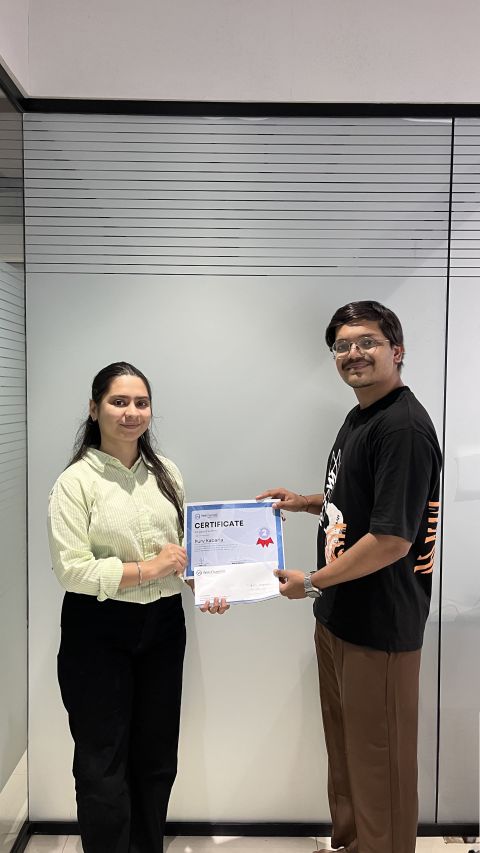
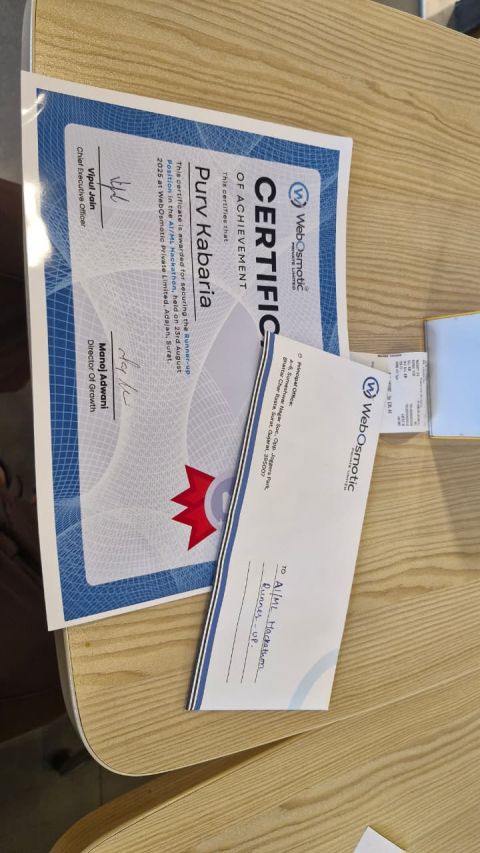
WebOsmotic, a software company in Surat, ran an on-site AI/ML hackathon in August 2025. It began with resume screening, and only 20 people were invited in. I walked out as 1st runner-up, which is a dignified way of saying second, and I will take it.
called on-site
20
overall
2nd
endpoints in 2 hours
3
AI tools in round 1
0
The format was delightfully contrarian. Round one banned AI entirely. Round two made it mandatory. Somewhere, a philosophy department is writing a paper about it.
Round 1: a RAG API, artisanally hand-crafted
We had two hours to build three API endpoints, with no AI assistance of any kind. Just you, the docs, and your muscle memory:
- 1Ingest: accept documents and split them into chunks.
- 2Retrieve: answer a query using only the uploaded documents.
- 3Generate: pass the query and the retrieved context to an LLM and return its answer.
That is the skeleton of every retrieval-augmented generation (RAG) system, and building it without autocomplete reveals very quickly whether you understand each bone. The decisions that matter are the unglamorous ones: how large a chunk should be and how much neighbouring chunks overlap, how to rank chunks against a query, how many to hand the model, and what the endpoint says when nothing relevant exists. ("I don't know" is a feature, not a failure.)
Round 2: fixing production with a co-pilot
Then the rules flipped. We were handed a broken production codebase and asked to bring it back to life, using an AI agent as our guide.
This round tests something quite different from writing code: reading an unfamiliar system quickly, forming a hypothesis about what is broken, and interrogating the agent's suggestions rather than pasting them in on faith. An agent can find the right file in seconds. It can also fix a symptom with tremendous confidence while the actual cause sits two files over, smirking. Telling those apart is the entire skill.
What I took home, besides the certificate
- Fundamentals first, tools second. Round one rewarded knowing how RAG works with no help. Round two rewarded using AI well on top of that. You need both, in that order.
- Small, testable pieces. Three separate endpoints are easier to build, debug and demo than one heroic endpoint that does everything.
- Review the agent like a teammate's pull request. Read it, run it, and check that it fixes the cause rather than silencing the symptom.